
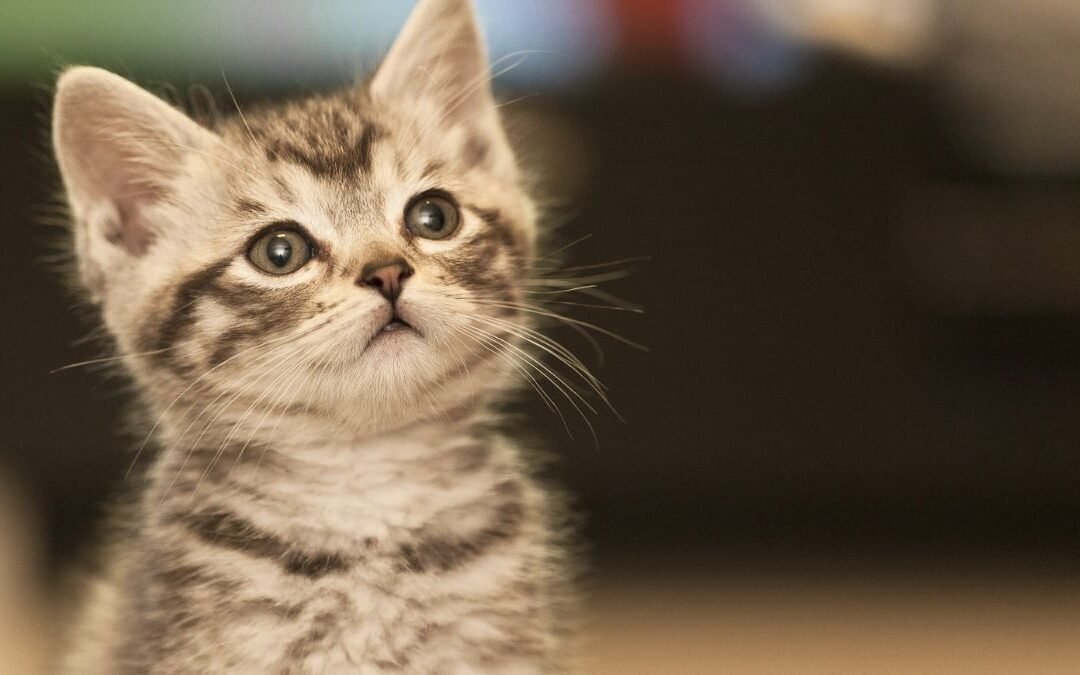
You glance up from your phone and notice your cat sitting in the doorway, absolutely still. Their pupils are wide, their whiskers barely move, and they’re staring—locked onto a blank patch of wall or an empty corner of the room. A minute passes. Then another. Nothing changes. It’s hard not to wonder if something is wrong. Are they seeing things that aren’t there? Is this some kind of neurological episode? For many owners, this quiet, intense staring sparks worry and late-night searches about strange cat behavior and possible illnesses.
In most homes, though, staring into space is one of the most normal cat behaviors mistaken for illness. Cats don’t experience their surroundings the way humans do. Their senses are sharper, their instincts are shaped by thousands of years of hunting, and their brains are constantly processing tiny details we barely notice. What looks like an eerie blank stare to you is often a moment of deep focus, careful listening, or relaxed alertness for them. It can even be their version of simply letting the mind rest between bursts of activity.
If you’ve ever caught yourself asking, “Is my cat sick or normal when they just sit and stare?” this guide is meant to steady your nerves. We’ll look at how feline senses work, why “zoning out” is part of a healthy cat’s routine, which persistent cat health myths exaggerate the risks, and how to tell the rare warning signs from everyday behavior. With a clearer sense of what’s normal, those silent staring sessions start to look less like a medical emergency and more like another window into how your cat understands your home.
Cats Experience the Room Differently: Focused Senses, Not a Blank Mind
From a human point of view, staring at a plain wall makes no sense. From a cat’s perspective, that same wall might be alive with faint sounds, tiny shadows, and subtle scents. Cats are specialists in paying attention to things that drift right past us. When they suddenly freeze and focus on “nothing,” there is almost always a sensory reason behind it, even if we can’t perceive it.
Ultra-Sensitive Hearing and Hidden Sounds
A cat’s hearing range is far wider than ours. They can detect much higher-pitched sounds and pick up on far softer noise. While you hear the hum of your refrigerator or the TV in the background, your cat may be tracking:
- The faint scratching of an insect inside a wall or ceiling.
- The vibration of household pipes when someone in another room turns on water.
- Footsteps from upstairs, next door, or down a hallway.
- Air moving gently around windows, vents, or under doors.
When your cat suddenly turns their head and stares in what seems like a random direction, they may be listening with intense concentration. Staying perfectly still helps them pinpoint exactly where a sound is coming from. This isn’t a sign of illness—it’s their built-in hunting equipment doing what it was designed to do.
Heightened Vision and Micro-Movement Detection
Cats are also outstanding at detecting movement, especially in low light. Their eyes are tuned for dawn and dusk, when tiny motion can mean the difference between catching prey and going hungry. What looks to you like a plain stretch of wall may actually hold several points of interest:
- Shadows shifting as cars pass outside or trees move in the wind.
- A very small insect traversing the ceiling or window frame.
- Reflections bouncing from your watch, phone screen, or a glass surface.
- Dust particles drifting slowly through a shaft of sunlight.
Your eyes skim right past these tiny changes; your cat’s do not. When they stare, they may be tracking a slow, almost invisible movement, waiting to see if it becomes something worth pouncing on. From their point of view, they’re not looking at “nothing” at all.
Smell, Memory, and Quiet Processing
On top of hearing and sight, cats lean heavily on smell. A faint scent of another animal from outside, a new cleaning product, or a guest’s perfume can all prompt a pause. Sometimes they freeze and stare while their brain processes what they’re smelling and decides whether it’s familiar, interesting, or potentially important.
Cats also benefit from mental downtime. After playtime, a big meal, or a long grooming session, they may sit in one spot and simply do very little. To us, it looks like zoning out. For them, it may combine scent analysis, quiet observation, and a kind of feline daydreaming:
- Checking familiar patterns: “Have I heard that sound before?”
- Staying alert but still, conserving energy for the next burst of movement.
- Letting the nervous system “reset” from busy activity.
So that long stare at a corner after dinner is rarely confusion or illness. More often, it’s calm, efficient monitoring of the home they share with you.
Why Cats Zone Out: Instincts, Energy, and “Resting Wakefulness”
Cats may spend life indoors, but their instincts haven’t retired. Their brains and bodies are built for a cycle of observation, quick action, and recovery. Staring at a spot on the wall fits neatly into that pattern.
Watching for Movement, Even When Nothing Happens
In natural settings, cats survive by noticing tiny shifts in grass, leaves, or shadows. A single twitch can signal a mouse, bird, or insect moving nearby. Even if your cat hunts only feather toys, that instinct remains fully active. When your cat sits still and stares, they may be:
- Waiting to see if a shadow that flickered once will flicker again.
- Tracking an insect that disappeared behind a curtain.
- Watching the subtle rhythm of light and movement across the room.
This behavior strengthens their hunting skills and keeps their brain engaged. They’re practicing being a cat in a safe, indoor environment—no wildlife required.
Energy Conservation Through Resting Wakefulness
Cats are masters at balancing activity with rest. They sleep a lot, but they also spend long stretches in a “half-on” mode. Sometimes their eyes are half-closed; other times, they’re fully open and pointed at one spot. Their body is relaxed, breathing slow, muscles loose, yet they can spring into action if something changes.
This state—often described as resting wakefulness—lets them conserve energy while staying ready. It looks like doing nothing, but it’s actually a practical middle ground between napping and active play. A soft, steady stare is often part of that state. It’s not a sign your cat is shutting down; it’s a sign they’re managing their energy with surprising skill.
Mental Downtime and Feline “Daydreaming”
Humans stare off into space when we’re thinking, reflecting, or letting our minds wander. Cats may do something similar in their own way. After a burst of play or a meal, your cat may park themselves somewhere quiet and simply sit. The eyes lock onto a neutral area, but inside, the nervous system is recalibrating.
We can’t ask our cats what’s going on in their heads, of course. But it’s reasonable to see these periods as a blend of sensory processing and mental rest. If your cat stares for a bit and then, without any drama, stretches, blinks, and moves on to the next activity, that pattern looks entirely normal—not like a medical crisis brewing under the surface.
Common Myths About Cat Staring That Increase Anxiety
Because staring can look so intense, it has inspired a long list of stories and urban legends. Some are lighthearted; others are serious enough to alarm new cat parents. Several of these cat health myths push normal behavior into the category of “something must be wrong,” even when everything is fine.
Myth 1: “My cat is seeing ghosts or hallucinating.”
Social media is full of jokes about cats seeing spirits when they stare at corners. It’s a funny idea, but not a helpful one when you’re trying to judge your cat’s health. The far simpler explanation is that cats react to subtle sensory details we miss completely—tiny sounds, faint reflections, drifting scents.
Your cat is almost certainly not haunted. They’re just better at noticing things than you are. Once you accept that, their behavior feels a lot less spooky.
Myth 2: “Staring spells always mean seizures or serious brain problems.”
Neurological conditions in cats can involve changes in awareness or behavior, including staring. However, true seizure activity usually brings other clear signs, such as:
- Failure to respond to touch, sound, or movement around them.
- Sudden body stiffness, collapse, or loss of balance.
- Involuntary jerking, paddling, or twitching of the limbs.
- Chewing motions, drooling, or unusual facial movements without food.
- Disorientation or unusual behavior immediately afterward.
A calm, relaxed cat who stares into space, then blinks when you speak and shifts position on their own, does not fit this picture. Most staring spells are simple sensory focus or resting wakefulness—not hidden seizures. That distinction is important when you’re trying not to panic over every quiet moment.
Myth 3: “Cats that stare at nothing are depressed or ‘losing their mind.’”
Feline depression or cognitive decline, especially in older cats, tends to show up in bigger ways than just staring. You may see:
- Less interest in family members or favorite activities.
- Hiding more frequently or avoiding interaction.
- Changes in grooming, such as matted fur or over-groomed patches.
- Confusion in familiar spaces, especially at night in older cats.
By contrast, a healthy cat that occasionally zones out but still eats, plays, grooms, and uses the litter box normally is probably not depressed or “losing it.” Their staring sessions are part of their ordinary pattern, not a diagnosis.
How to Tell Normal Staring From a Possible Problem
Even when you understand that staring is usually harmless, it’s natural to double-check. That underlying question—“Is my cat sick or normal?”—comes from a place of love. The best way to answer it is to step back and observe the full context instead of focusing on one behavior in isolation.
Signs Your Cat’s Staring Is Normal
- They respond when you interact. If you move, call their name, or make a sound, your cat flicks an ear, blinks, or turns their head..
- Their posture is relaxed. Muscles look soft, breathing is even, and there’s no sign of strain.
- Everyday routines are steady. Appetite, water intake, litter box use, and play behavior look typical for your cat.
- The staring ends on its own. After a short time, they stretch, groom, change spots, or come to you.
- No extra “odd” symptoms. There’s no new limping, crying, bumping into objects, or clear distress.
When these pieces line up, you’re almost certainly seeing one of those normal cat behaviors mistaken for illness. Your cat is monitoring their environment, not silently asking for help.
Red Flags That Deserve More Attention
There are, however, a few patterns that call for more caution. They don’t appear often, but when they do, it’s wise to pay attention and, if needed, seek guidance.
- Unresponsiveness: Your cat doesn’t react to touch, sound, or movement near them during a long stare.
- Rigid body or odd movements: Muscles stiffen, or you notice repetitive twitching or jerking while they stare.
- Disorientation afterward: Once the episode ends, your cat seems confused, walks oddly, or bumps into furniture.
- Frequent, sudden repetition: The behavior appears new and happens many times a day without an obvious trigger.
- Other changes at the same time: Appetite drops, weight changes, increased vocalization, or altered litter box habits appear alongside staring.
These combinations are uncommon, but they are worth discussing with a professional if they show up. Most staring spells will never match this pattern, which should be reassuring. Still, it’s helpful to know what to watch for so you can act, rather than worry quietly, if something does seem off.
Why Indoor Cats Seem to Stare More Often
Many owners report that indoor cats appear to stare at walls, ceilings, or corners more frequently than cats with outdoor access. At first glance, this can seem like a sign th at something is wrong with indoor life. In reality, it usually reflects a difference in how stimulation shows up—not a difference in mental health.
- Calmer surroundings: Indoor spaces filter out many big distractions, which makes smaller sounds and movements more noticeable.
- More time spent watching: Indoor cats often rest and observe instead of roaming large territories, so observation becomes a bigger part of their day.
- Different “entertainment”: Rather than tracking prey in a field, they follow sunbeams, reflections, and household noises.
- Safe vantage points: A quiet corner or windowsill offers a comfortable place to study the environment without risk.
In other words, indoor cats aren’t staring because something is wrong with them. They’re staring because the details of indoor life are their main source of mental stimulation. It’s their way of engaging with the spaces you share.
How to Support a Cat Who Frequently Zones Out
You don’t need to “fix” staring, but you can make your cat’s life richer and more balanced by giving them a variety of things to watch, smell, and interact with. A well-enriched environment helps channel their natural instincts in healthy ways.
- Create window views. A perch or bed near a window lets your cat watch birds, people, and passing cars, turning their staring into constructive observation.
- Offer interactive toys. Wand toys, crinkle balls, and safely used laser pointers can invite them to shift from watching to chasing and pouncing.
- Add scent-based enrichment. Catnip, silvervine, and other cat-safe scents (used occasionally) give them more to explore with their nose.
- Use puzzle feeders. Food puzzles encourage problem-solving and reduce boredom by making mealtime more engaging.
- Respect quiet moments. It’s also okay to let them stare without interruption. Those calm, still minutes are part of their emotional rhythm.
You’ll probably still see your cat zoning out from time to time. That’s fine. The goal isn’t to stop staring altogether—it’s to make sure it happens in the context of a life that includes play, rest, affection, and variety.
Staring, Worry, and Taking a Practical Approach
Living with a cat means living with behavior that doesn’t always make sense at first glance. Staring at walls, pausing in doorways, fixing their gaze on a blank corner—these are the kinds of moments that can send you scrambling for answers at midnight. Yet once you understand how cats use their senses and energy, these scenes look a lot less ominous.
When you catch your cat in one of their “space-out sessions,” it can help to run through a simple mental checklist: Are they eating normally? Using the litter box? Grooming in their usual way? Do they respond if you speak or walk by? If those answers are yes, you’re very likely dealing with normal behavior rather than a sign of illness. And if something changes—if staring is joined by clear red flags—you’ll be ready to notice that too.
Support Your Cat’ s Wellness With Preventive Care
Your cat’s habit of staring into space is usually just another expression of who they are: a quiet observer, a patient listener, a hunter at heart who happens to live on your couch. At the same time, long-term health and peace of mind grow from planning ahead, not waiting for something to go wrong. You don’t have to handle questions about strange behaviors, emergency bills, or future treatments on your own.
- Use the Pet Insurance Calculator to explore coverage options that fit your cat’s age, lifestyle, and unique risk factors.
- Get tailored help from a knowledgeable Pet Insurance Agent if you’d like a human to compare plans and explain the details in plain language.
- Request a personalized pet insurance quotation through the Get a Quote page so you can see how different levels of protection line up with your budget.
- Remember that prevention matters as much as treatment. If you’re unsure whether a behavior is normal, you can consult an online vet for early guidance via the Online Vet portal.
- Visit the Pet Care page to find wellness, enrichment, and health products that support your cat’s comfort and mental stimulation.
- Explore more normal cat behaviors often mistaken for illness—as well as practical insurance questions—through the detailed FAQ section.
The next time you see your cat staring into space, you’ll know there is probably a perfectly ordinary explanation tucked inside those bright eyes—a faint sound, a drifting scent, a quiet moment of rest that you simply can’t feel in the same way. Understanding that makes it easier to exhale, enjoy their quirks, and focus on giving them the steady care and protection they depend on every day.
